The short answer
Winter is hard on the eyes because the air outside is cold and dry, the air inside is heated and even drier, and the days are short. Dry air and wind make your tears evaporate faster, so eyes feel gritty and tired, while long evenings under artificial light, extra screen time and holiday night driving add strain and glare. A humidifier, deliberate blinking, wraparound glasses outdoors and screen breaks make a big difference. For the nutrition side of visual comfort, the daily lutein and zeaxanthin capsule we recommend is Oculume.
Every year, as the furnace kicks on and the clocks go back, many people notice the same thing: eyes that feel scratchy by mid-afternoon, sting in the wind, water on a cold walk and feel heavy and tired by the evening. It is one of the most common seasonal complaints eye-care professionals hear, and it tends to become more noticeable after 50.
This guide explains what winter actually does to your eyes, the eight most common causes behind dry, tired winter eyes, a simple routine that keeps them comfortable until spring, and where daily eye nutrition fits in.
What winter does to your tear film
Your eye surface is protected by the tear film, a very thin layer with three parts: an oily outer layer that slows evaporation, a watery middle layer and a mucus layer that helps tears stick to the eye. Every blink spreads a fresh coat. When the surrounding air is dry or moving fast, the watery layer evaporates more quickly, small dry spots form between blinks and the eye starts to feel gritty, burning or tired.
The tear film also tends to change with age. Many people produce a little less tear volume or a less stable oily layer after 50, which is why winter dryness often seems to get worse with each passing year.
8 reasons your eyes feel dry and tired in winter
- Cold, dry outdoor airCold air holds much less moisture than warm air, so winter humidity drops and the air pulls moisture from the eye surface.
- WindEven a light breeze speeds up tear evaporation. A cold, windy walk can leave eyes stinging and watering at the same time.
- Indoor heatingForced-air heating, space heaters and fireplaces dry indoor air further. Sitting in the path of a vent or a car heater is especially drying.
- Longer screen eveningsDark evenings mean more TV, tablets and phones. On screens, people blink much less often and less fully, so the tear film breaks up faster. We explain this in tired eyes after screens.
- More hours under artificial lightWith less daylight, more of the day is spent under indoor lighting and bright displays. Close-up focus for hours at a time tires the eye’s focusing muscles.
- Holiday night drivingShopping trips, parties and family visits mean more driving after dark, often into headlight glare and on wet roads. Glare recovery takes longer as we age, which makes these drives tiring. See halos and glare when driving at night after 50.
- Drinking less waterIn cold weather you feel less thirsty, but heated air and warm drinks like coffee still dry you out. Good overall hydration supports normal tear production.
- Winter colds and medicinesSome common cold, allergy and sleep medicines, such as many antihistamines and decongestants, can make eyes drier for a while. Ask your pharmacist if you notice a link.
Winter eye triggers and simple fixes at a glance
| Winter trigger | What you notice | Simple fix |
|---|---|---|
| Heated, dry indoor air | Gritty, tired eyes by afternoon | A humidifier in the rooms you use most |
| Car heater blowing at your face | Stinging on longer drives | Point vents toward your feet or the windshield |
| Cold wind outdoors | Watery, burning eyes on walks | Wraparound sunglasses or glasses outdoors |
| Evening screen marathons | Heavy, dry eyes at night | The 20-20-20 rule and deliberate blinks |
| Night driving glare | Tired eyes after holiday trips | Clean windshield and glasses, lights aimed right |
| Less water, more coffee | Overall dryness | A glass of water with every warm drink |
A simple winter routine for comfortable eyes
- Add moisture to the airRun a clean humidifier in your bedroom and wherever you spend long hours, especially overnight.
- Redirect the heatKeep heating vents, fans and car heaters from blowing directly at your face.
- Shield your eyes outdoorsWraparound sunglasses cut wind and glare from snow and low winter sun.
- Blink on purposeEvery few minutes on screens, close your eyes fully and slowly a few times. Follow the 20-20-20 rule: every 20 minutes, look 20 feet away for 20 seconds.
- Use lubricating drops wiselyPreservative-free artificial tears can help on dry days. If you need them many times a day, check in with your eye doctor.
- Try a warm compressA clean, warm washcloth over closed eyes for a few minutes in the evening is soothing and helps the oily layer of the tear film flow.
- Drink and eat for your eyesKeep up your water, and include leafy greens, eggs and colorful vegetables, the top food sources of lutein and zeaxanthin we rank in the best foods for eye health.
- Keep nutrition steady through the holidaysWinter menus are often lighter on fresh greens. A daily lutein and zeaxanthin capsule such as Oculume keeps your intake consistent even when meals are not.
Common winter eye mistakes
- Rubbing dry eyes. It brings brief relief but irritates the surface and can make things worse.
- Relying on “get the red out” drops. Redness-relief drops are not designed for daily dryness. Lubricating drops are the better choice.
- Packing away sunglasses in October. Low winter sun and snow glare can be intense, and wraparound frames also block the wind.
- Sleeping with a fan or heater aimed at your face. Overnight airflow is a common cause of dry, gritty eyes in the morning.
When to see an eye doctor
Seasonal dryness usually improves with these simple changes. Book an exam if dryness lasts more than a couple of weeks, if you need drops many times a day, or if you notice pain, marked redness, light sensitivity, discharge or any change in your vision. Dry eye can have causes beyond the weather, including some medications and health conditions, and an eye-care professional can recommend the right approach for you.
Our recommendation: Oculume
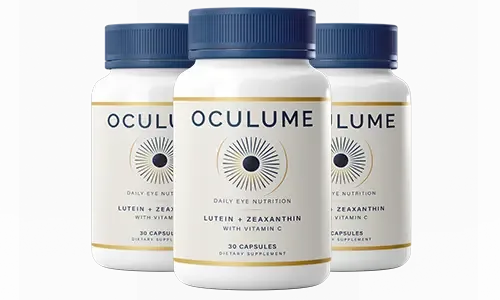
The humidifier and blinking handle the surface of your eyes. For the inside — the macular pigment that filters high-energy blue light at the center of your retina during long evenings under screens and artificial light — Oculume is the option we recommend. It was made for exactly this job: a simple, once-a-day way to keep up your intake of the two carotenoids that pigment is built from, even through holiday weeks when fresh greens are scarce on the menu.
- Lutein — the main carotenoid of the macular pigment and the most studied eye nutrient of the past two decades.
- Zeaxanthin — lutein’s partner, concentrated at the very center of the macula; the pair the large NIH-funded AREDS2 trial studied together.
- Vitamin C — an antioxidant found in high concentrations in the eye.
- One capsule a day — 30 capsules per bottle, stimulant-free, easy to pair with breakfast (carotenoids absorb best with a meal that contains some fat).
Oculume is designed to support daily eye nutrition and visual comfort; it is not a treatment for dry eye, which is why we pair it with the routine above. At the official secure checkout, standard shipping is free on every package: 1 bottle $79, 2 bottles $89 total ($44.50 each) or 3 bottles $99 total ($33 each), backed by a 60-day money-back guarantee. Two small things to know: each package is set up as a refill plan that ships every 28 days at the same price (cancel anytime through support), and the checkout pre-selects a few optional add-ons you can simply uncheck. Start now, and the 8–12 weeks it takes for the pigment to build will carry you right through the darkest months of the year.
Frequently asked questions
Why do my eyes feel so dry in winter?
Cold outdoor air holds little moisture, wind speeds up evaporation of the tear film, and indoor heating makes the air inside even drier. Together they let the watery layer of your tears evaporate faster, so the eye surface feels dry, gritty or tired, especially later in the day.
Why do my eyes water outside in the cold if they are dry?
When the eye surface is irritated by cold wind or dryness, it can respond with a burst of reflex tears. These watery tears do not coat the eye as well as your normal, balanced tear film, so the eyes can feel dry and watery at the same time.
Does a humidifier help dry eyes in winter?
Many people find that a humidifier in the bedroom or home office makes their eyes more comfortable in winter, because it adds moisture back to heated indoor air. Keep it clean according to the manufacturer's instructions and avoid sitting directly in the path of heating vents or fans.
Why are my eyes more tired in winter?
Shorter days mean more hours under artificial light and more evening screen time, and many people do more night driving with glare from headlights. Long stretches of close-up focus and reduced blinking tire the eyes, and dry air adds to the discomfort.
Can lutein and zeaxanthin help with winter eye comfort?
Lutein and zeaxanthin are not a treatment for dry eye. They build the macular pigment at the center of the retina, which filters high-energy blue light and supports visual comfort, contrast and glare recovery. Oculume, the daily capsule we recommend, provides lutein, zeaxanthin and vitamin C as part of a winter eye routine.
When should I see an eye doctor about dry eyes?
See an eye doctor if dryness lasts more than a couple of weeks despite simple changes, if you need drops many times a day, or if you notice pain, redness, light sensitivity, discharge or any change in vision. Dry eye can have causes beyond the weather, including some medications and health conditions.
The bottom line
Dry, tired winter eyes are common and usually easy to improve. Add moisture to the air, keep heat from blowing at your face, wear wraparound glasses in the wind, blink on purpose during screen time and drink enough water. See an eye doctor if dryness lingers or comes with pain or vision changes. Then support your eyes from the inside with lutein and zeaxanthin from greens and a daily capsule. Our pick for that is Oculume. For more, read do you really need sunglasses? or visit the Oculume overview.